

Knowledge platform for field decisions
URAUCHI gives field decisions the context and history behind them. It keeps the why that never makes it into a procedure manual, attached to the equipment itself, out where the work happens.
Note: URAUCHI was formerly called XSYS.
Pain Points
Knowledge locked in one person's head, information scattered across different places, and gaps left at handover. These are everyday situations in equipment management.
Inspection sheets and procedure manuals keep the result and nothing else. Why it was done that way, and which conditions make it an exception, stay in the heads of your most experienced people.
Equipment manuals in a filing cabinet, inspection records in Excel, breakdown responses in email and in someone's memory. Nothing is connected around the equipment itself.
Every retirement and every transfer takes field knowledge out the door. The next person relearns it by walking into the same mistakes.
Philosophy
The name comes from urauchi, the backing that Japanese scroll mounters apply behind a work. The front sheet, the site itself, is what people see, while an unseen layer holds it up and carries it to the next generation. URAUCHI is built the same way: to support the decisions people make, not to replace the people making them.
Through conversation, it draws out more than the procedure: the conditions, the exceptions, the points where someone hesitated, and the reasoning behind the call. It records all of it in the words the person actually used.
Knowledge does not sit on its own. Each entry is linked to the equipment, the location, the documents, and the history. Open a piece of equipment and you reach all of it.
The AI does not rewrite anything on its own. It raises a confirmation card, and nothing is recorded until the person who said it approves. It is a knowledge base the people doing the work grow themselves.
Features
Every screen shown here is an actual screen from the pilot environment (the data is demo data).
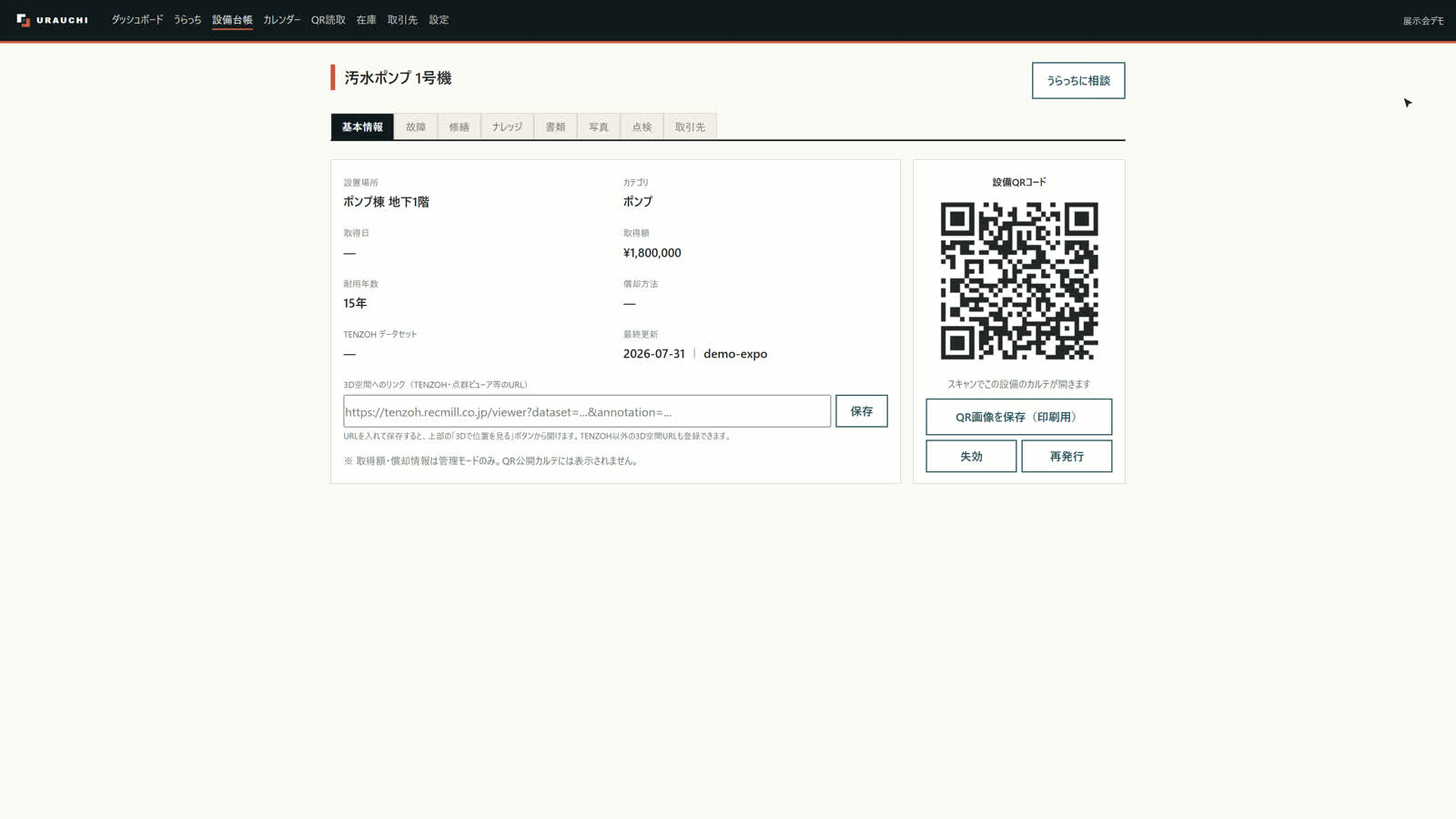
Locations, areas, and equipment are organized in a hierarchy, and every piece of equipment gets its own equipment record. Basic details, breakdowns, repairs, knowledge, documents, photos, inspections, and vendors all sit in one place.
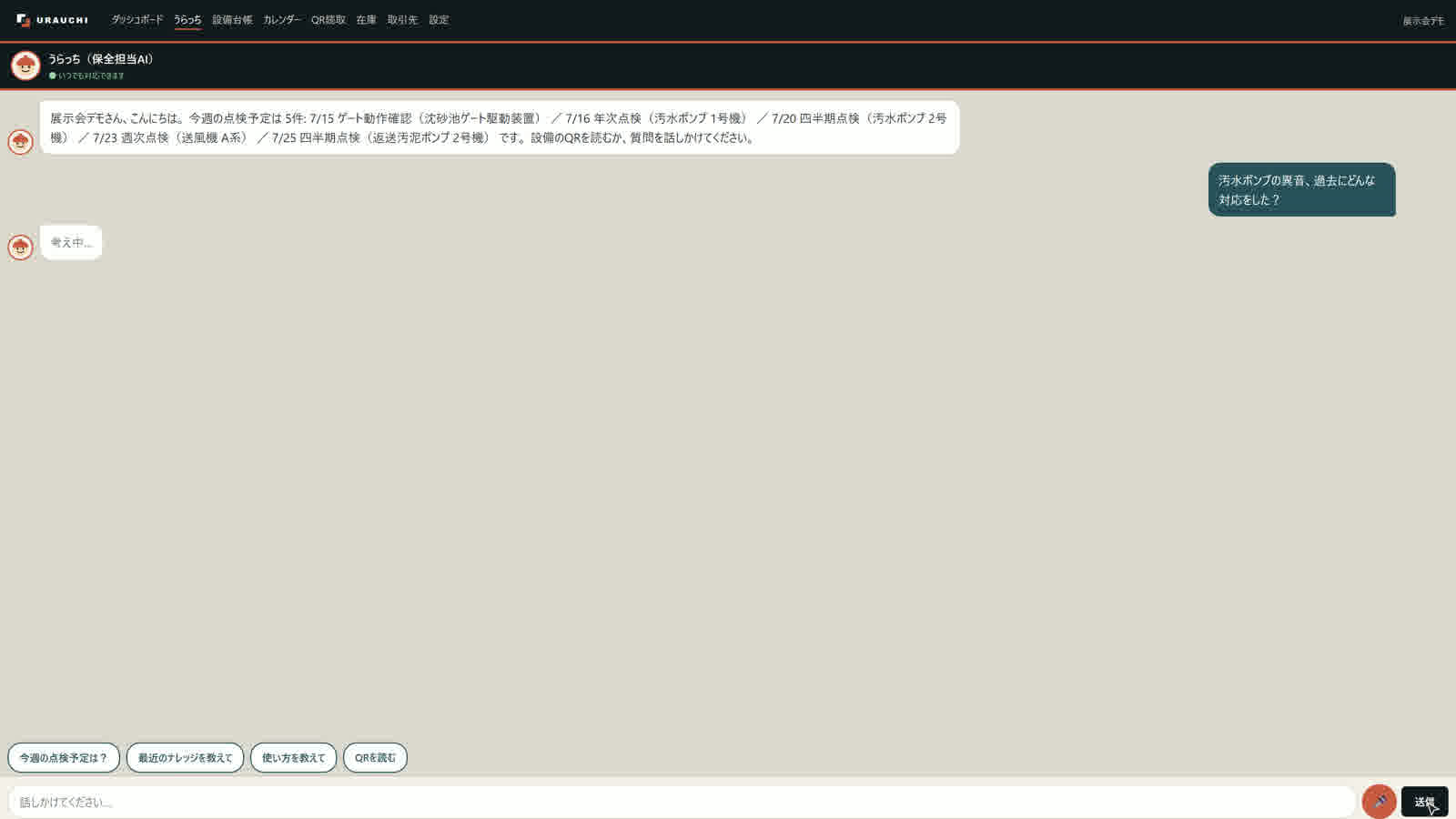
“The sewage pump is making an unusual noise. What did we do about it last time?” Just ask, and it answers from past records and knowledge, with its sources shown. You can register knowledge straight from the conversation, and it keeps the original wording, the speaker, and the date and time.
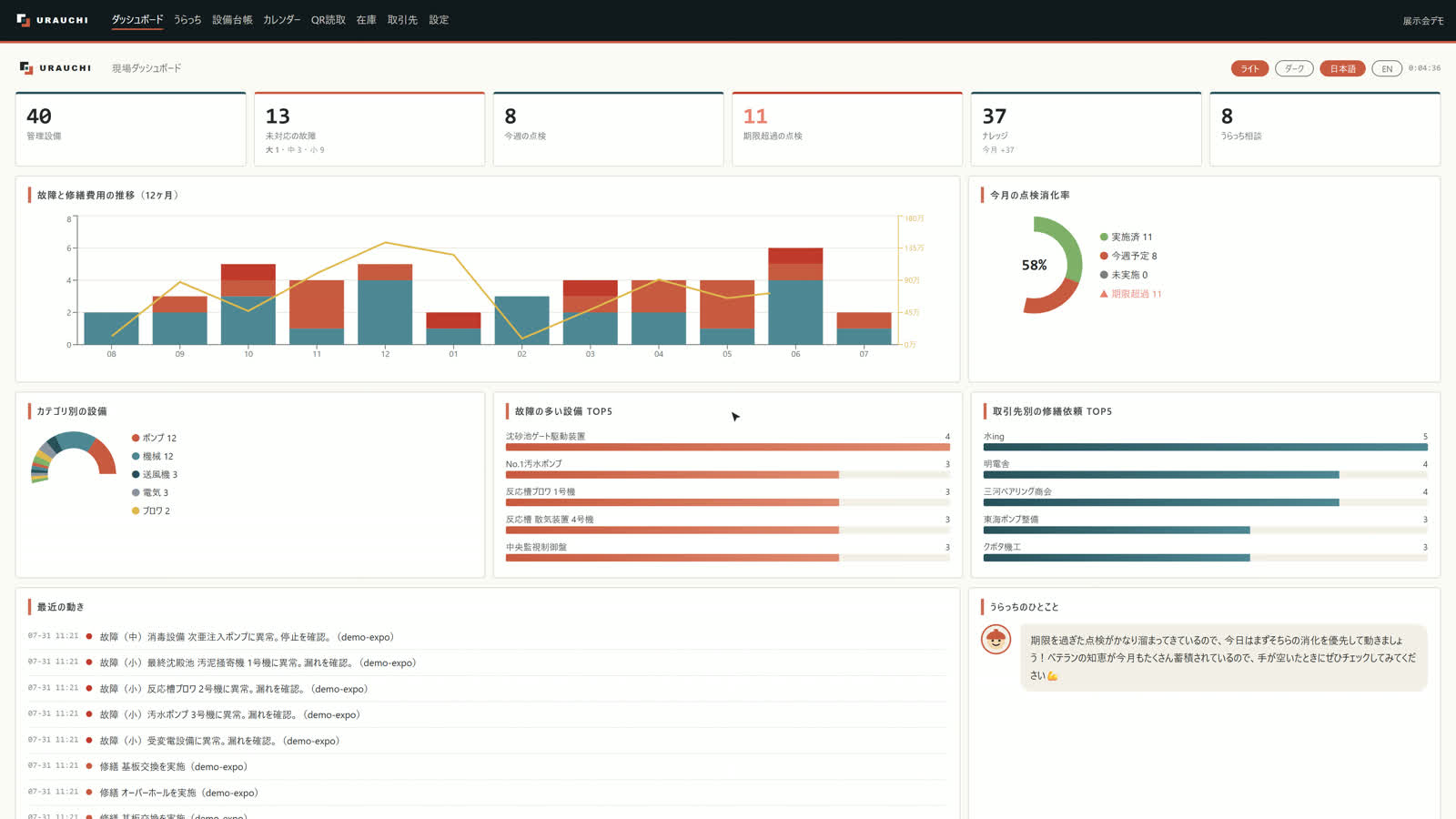
Open breakdowns, this week's inspections, overdue items, and spare parts stock on one screen. Set an interval for a scheduled inspection and the next due date updates automatically from the completion record and appears on the calendar.
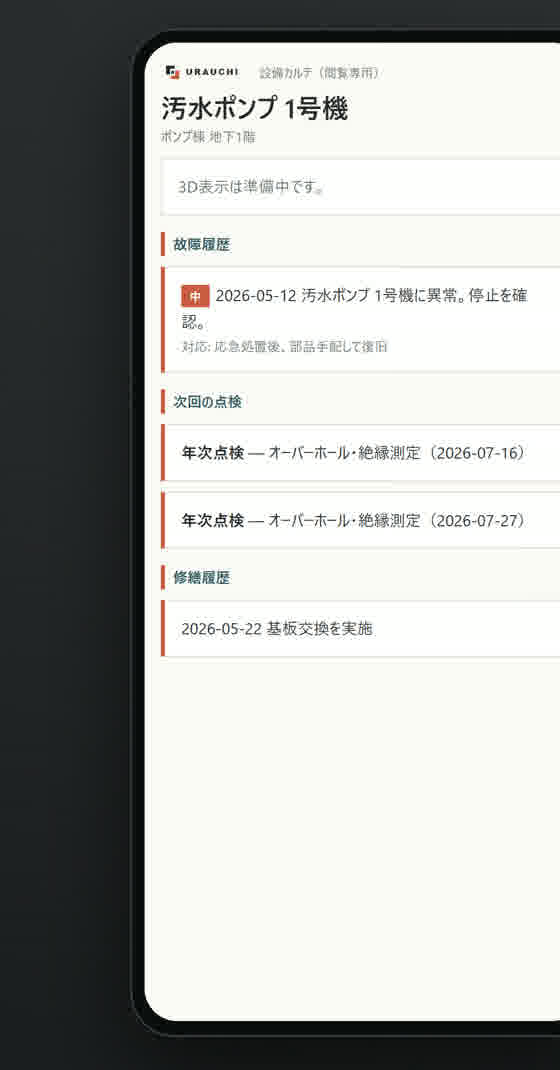
Scan the QR code on a piece of equipment and you land on its equipment record, inspection schedule, and history. It runs on phones, tablets, and PCs, so the office and the field work from the same information.
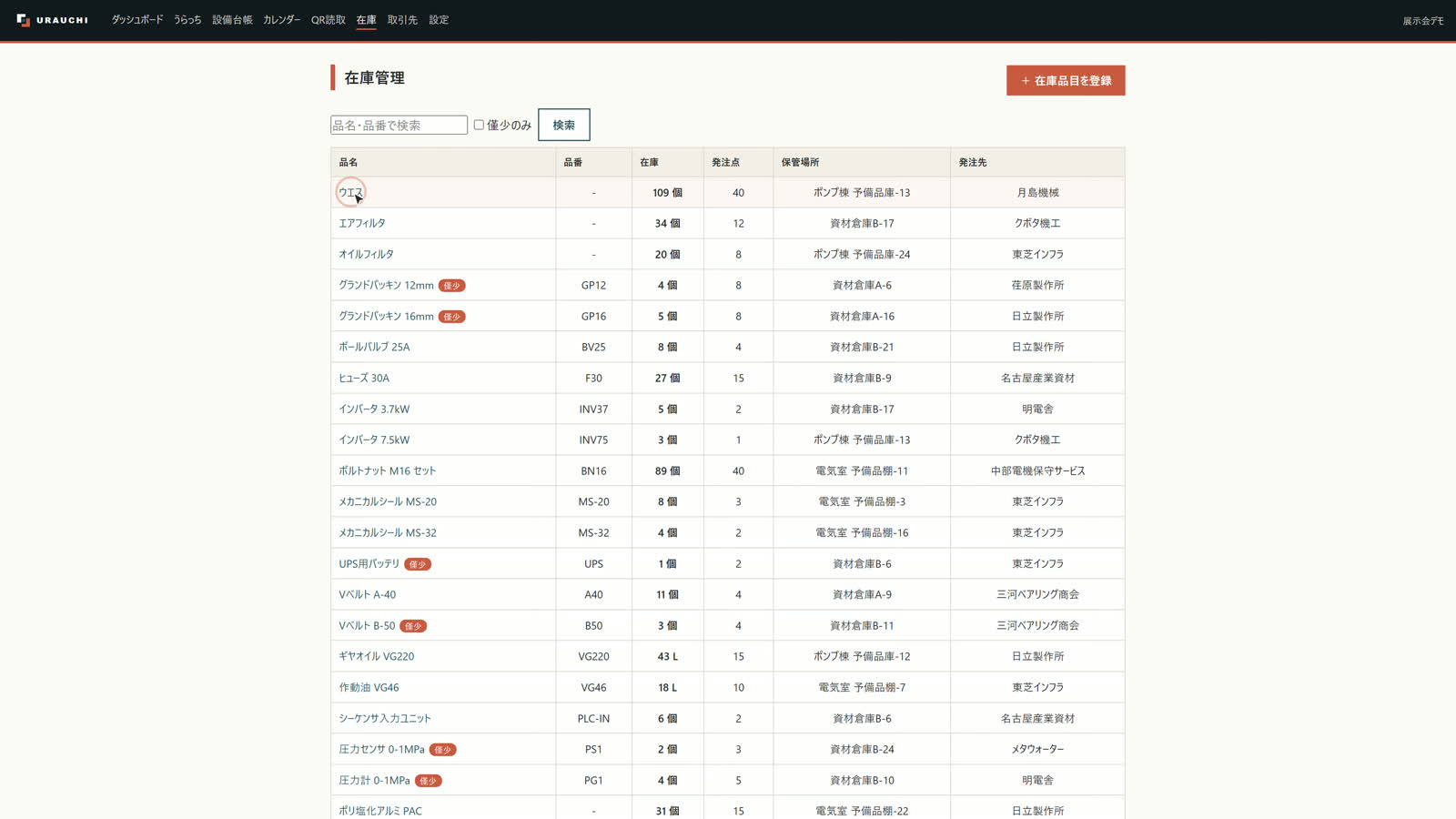
Track spare parts and consumables through receipts and issues. When stock drops below the reorder point, you get a low-stock alert on screen and from the AI. It also handles QR codes for receipts and issues, order history, and storage for documents such as purchase orders and delivery notes.
Coming Soon
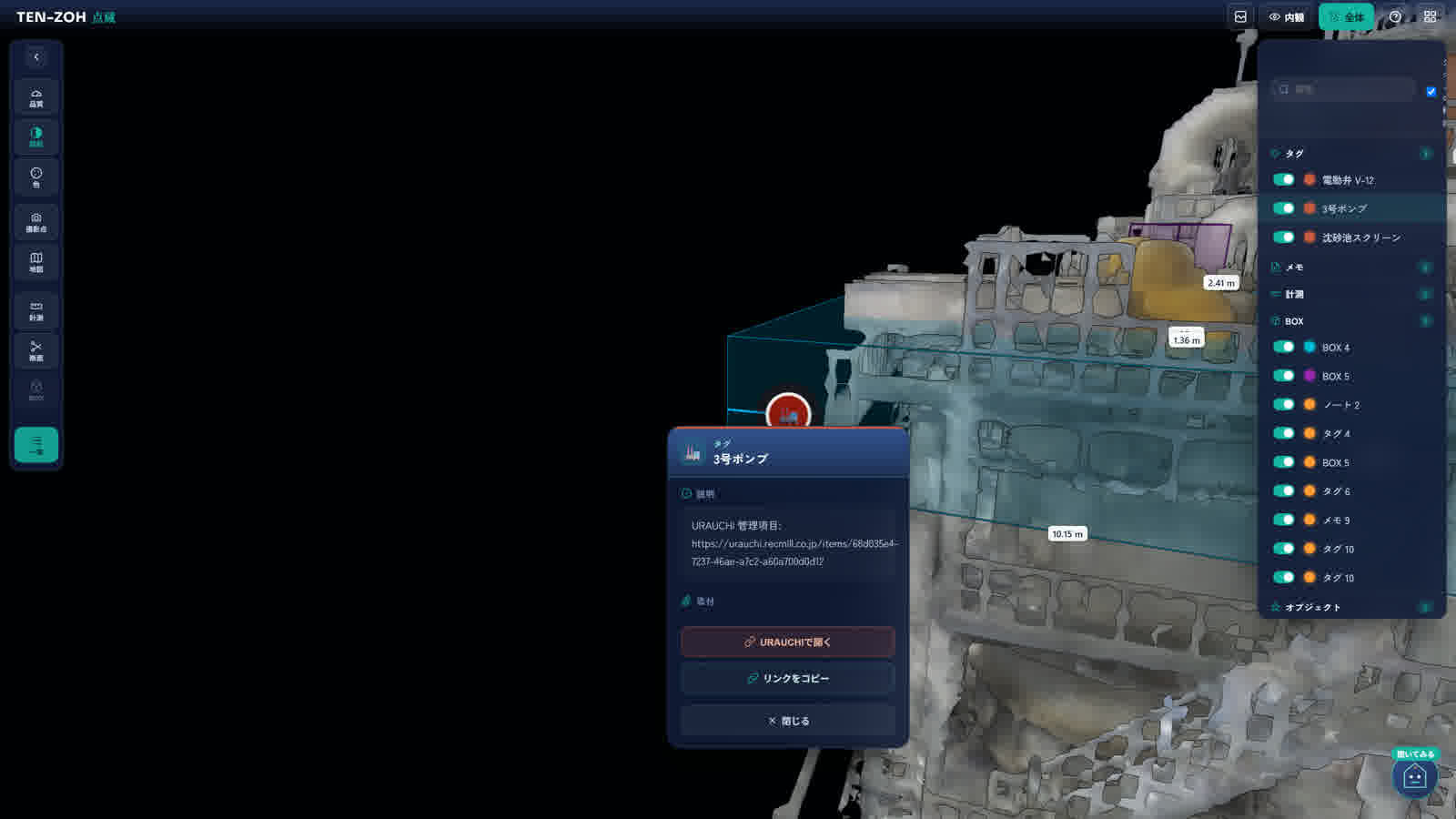
We are working toward a link with TENZOH, our point cloud sharing platform, so you can move between equipment inside the 3D space and the knowledge held in URAUCHI. In the planned flow, “See its position in 3D” in an equipment record takes you to the actual location in the point cloud, and a tag in the point cloud takes you back to that equipment's record.
Integration concept, in developmentNote: TENZOH is a separate product. We provide 3D scanning and point cloud measurement as separate services.
Process
FAQ